
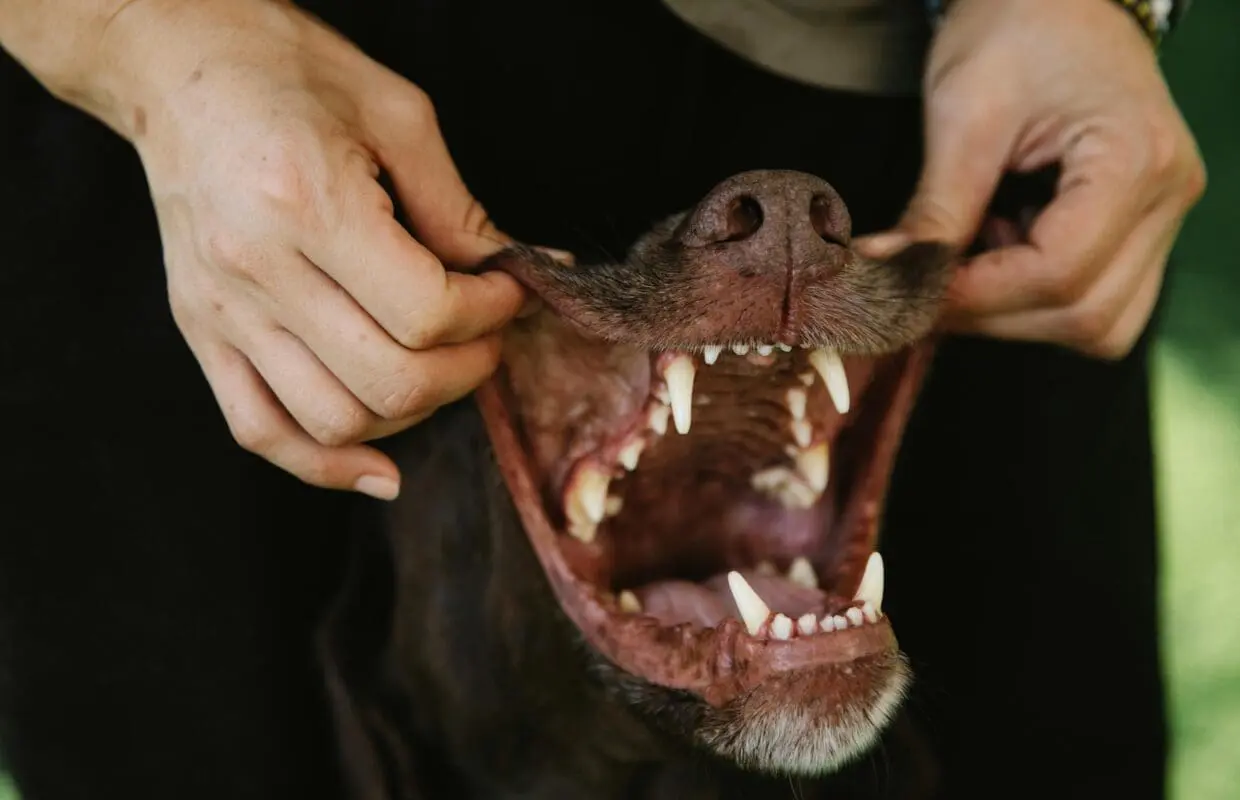
Bad breath in dogs is common, but it is not always just “normal dog smell.” Halitosis is the medical term for “bad breath” and it can have many abnormal underlying causes. Dog halitosis can be linked to something as simple as plaque buildup or as serious as kidney disease or liver disease. This article covers the most common causes of bad breath in dogs, which breath smells are worth paying attention to, and when to call Hershey Veterinary Hospital.
What Causes Bad Breath in Dogs?
The most common cause of bad breath in dogs starts with oral hygiene. Bacteria feed on food particles left on the teeth and gums, eventually hardening into plaque and tartar. If left untreated, this leads to periodontal disease, gum disease, and infection, all of which produce strong, unpleasant odors. Diet, chewing habits, and how consistently you brush your dog’s teeth all affect breath smell over time. Some dental issues are minor, while others need prompt dental care to protect your dog’s comfort and overall health.
When Bad Breath Can Signal a Bigger Health Issue
Sometimes smelling breath that has changed character is the first clue that something more serious is going on. Here are patterns that deserve attention:
~ In older dogs, a sudden change in breath smell alongside weight loss or increased thirst always warrants a vet visit
~ A rotten smell with red or bleeding gums and loose teeth are signs of dental disease and periodontal disease
~ A sweet or fruity odor can suggest diabetes
~ A urine-like smell may point to kidney disease
~ A sour or metallic odor combined with vomiting or drooling can indicate digestive or systemic health conditions
~ Unexplained swelling or bleeding in the mouth can raise concern for oral tumors
None of these patterns guarantee a serious diagnosis, but all of them should be evaluated by a veterinarian.
At-Home Checks and Daily Oral Hygiene
Before your appointment, gently lift your dog’s lips in good lighting and look for red gums, heavy tartar, broken teeth, or anything stuck in the mouth. Note whether the breath smell has changed recently and watch for shifts in eating, drinking, energy, or drooling, since these can help your vet identify whether the problem is dental or related to other health conditions.
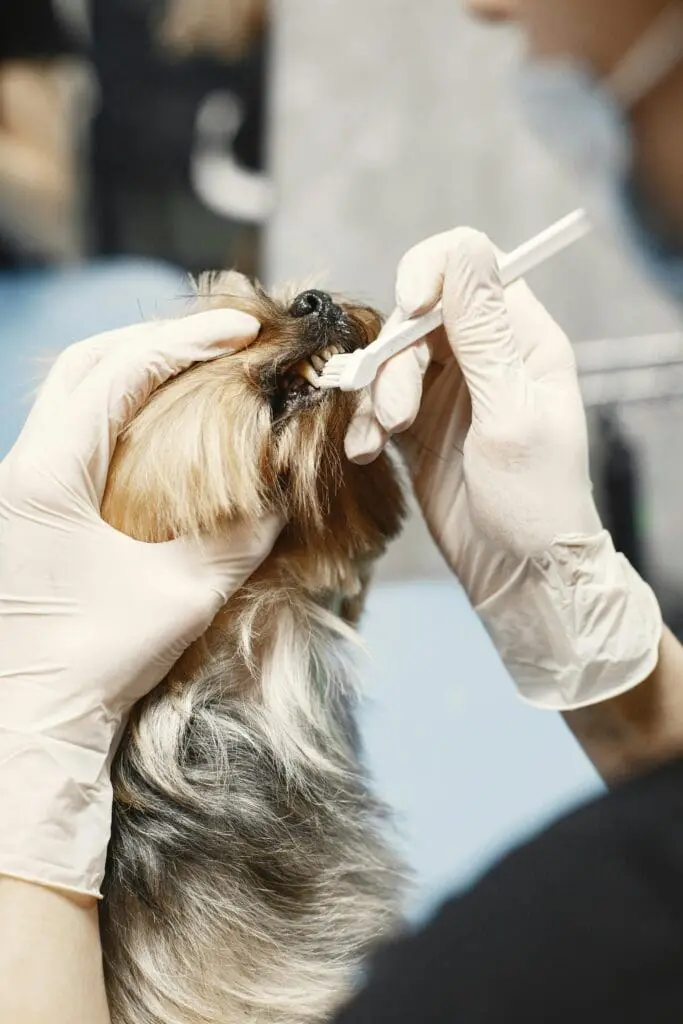
To prevent bad breath and support good oral health at home, brush your dog’s teeth regularly using dog-safe toothpaste and supplement with vet-recommended dental chews. Avoid hard bones that can crack teeth and skip human toothpaste entirely. Consistent oral hygiene can greatly reduce bad breath in dogs, but it cannot reverse established dental disease or remove heavy tartar on its own.
How Vets Diagnose and Treat the Cause
Your vet will start with a full dog mouth exam, checking the teeth, gums, tongue, and palate. Bloodwork may be used to uncover hidden tooth infection, gum disease, or signs of health problems involving the kidneys or liver. Professional dog teeth cleaning under anesthesia removes plaque and tartar above and below the gumline. More advanced dental care or oral surgery may be needed for severe periodontal disease or oral tumors. Timely treatment can improve breath, reduce pain, and help protect your dog’s long-term health.
When to See the Vet
Contact Hershey Veterinary Hospital if your dog’s breath suddenly smells much worse, if you notice bleeding, loose teeth, or reluctance to chew, or if bad breath comes alongside vomiting, weight loss, or changes in drinking or urination. These are signs the problem goes beyond a simple dental health issue and needs prompt attention.
Trust Hershey Veterinary Hospital for Dog Dental Care
At Hershey Veterinary Hospital, our compassionate team understands that bad breath in dogs can be a window into their overall health. Whether your dog needs a routine cleaning, a full oral exam, or a workup to rule out other health conditions, we are here to help. Call us or schedule an appointment online and let our team find the cause and recommend the right treatment plan.
About The Author