
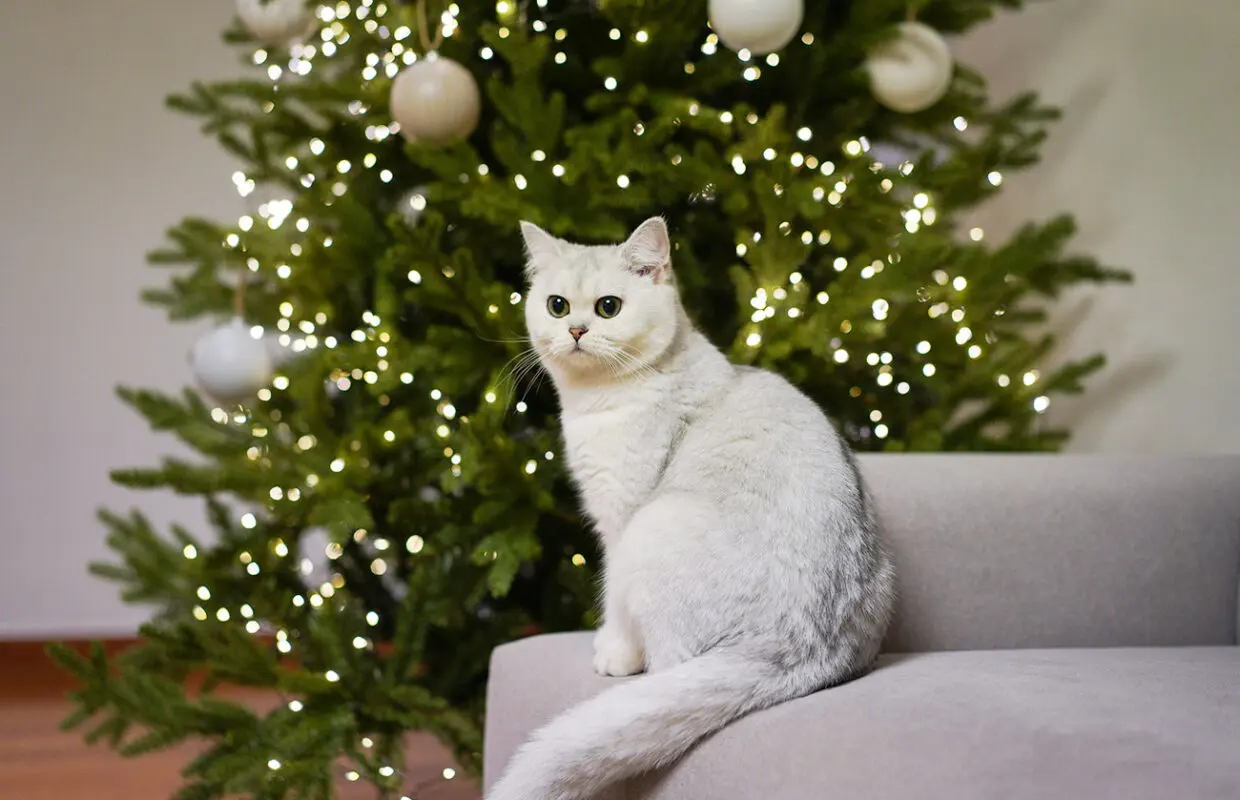
The holidays bring beautiful decorations, twinkling lights, and festive plants that brighten our homes. Unfortunately, several of these seasonal favorites can be harmful — and in some cases dangerous — for dogs and cats. Knowing the common plants toxic to cats and dogs can help families keep their pets safe while still enjoying the holiday spirit.
Below are the most common holiday plants to look out for, what symptoms they may cause, and safer alternatives for pet-friendly homes.
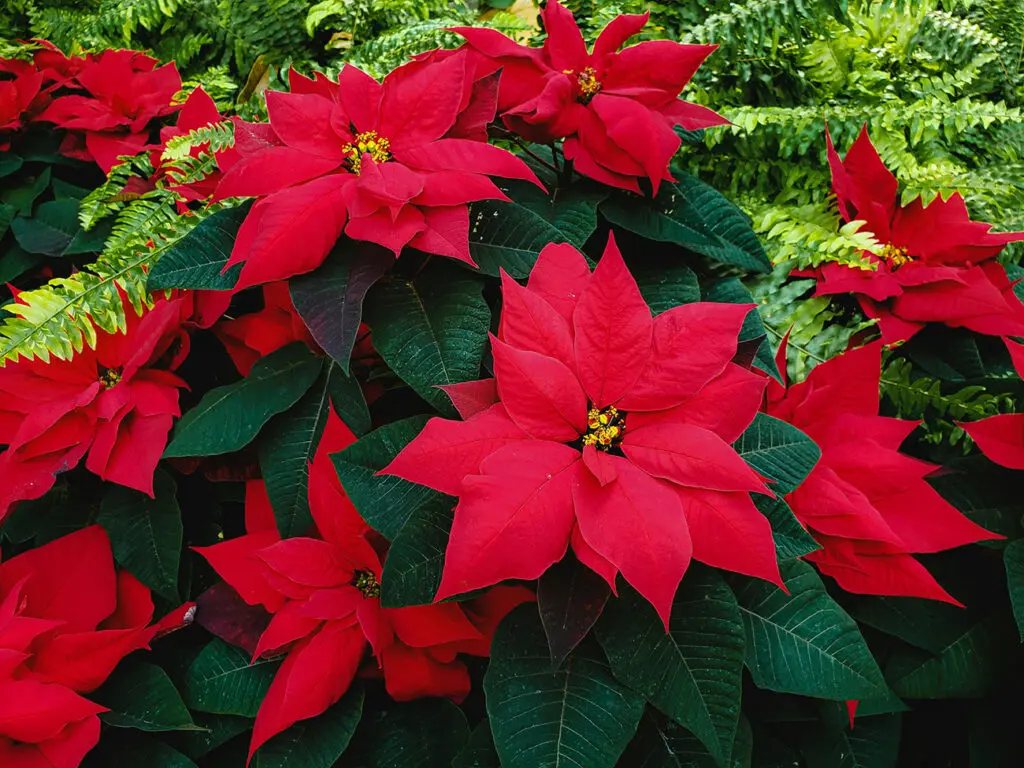
Poinsettias
Poinsettias have a long-standing (and exaggerated) reputation for being highly toxic. The good news: they’re mildly toxic, not deadly. But they can still cause discomfort if chewed or eaten.
Why they’re a problem:
The sap is irritating to the mouth and stomach.
Symptoms:
- Drooling
- Pawing at the mouth
- Mild vomiting
- Mild diarrhea
Most cases are not severe, but pets should still be monitored closely.
Lilies (EXTREMELY toxic to cats)
This is the most dangerous holiday plant for cats. Even tiny exposures — licking pollen, chewing a leaf, drinking water from a vase — can cause life-threatening kidney failure.
Common holiday lilies include:
- Peace lilies
- Stargazer lilies
- Tiger lilies
- Daylilies
- Lily bouquets or mixed arrangements
Symptoms in cats:
- Drooling
- Vomiting
- Lethargy
- Increased thirst
- Kidney failure within 24–72 hours
Important: Dogs are less sensitive, but lilies can still cause irritation or stomach upset.
If a cat may have eaten or licked a lily, this is an emergency — immediate veterinary attention is critical.
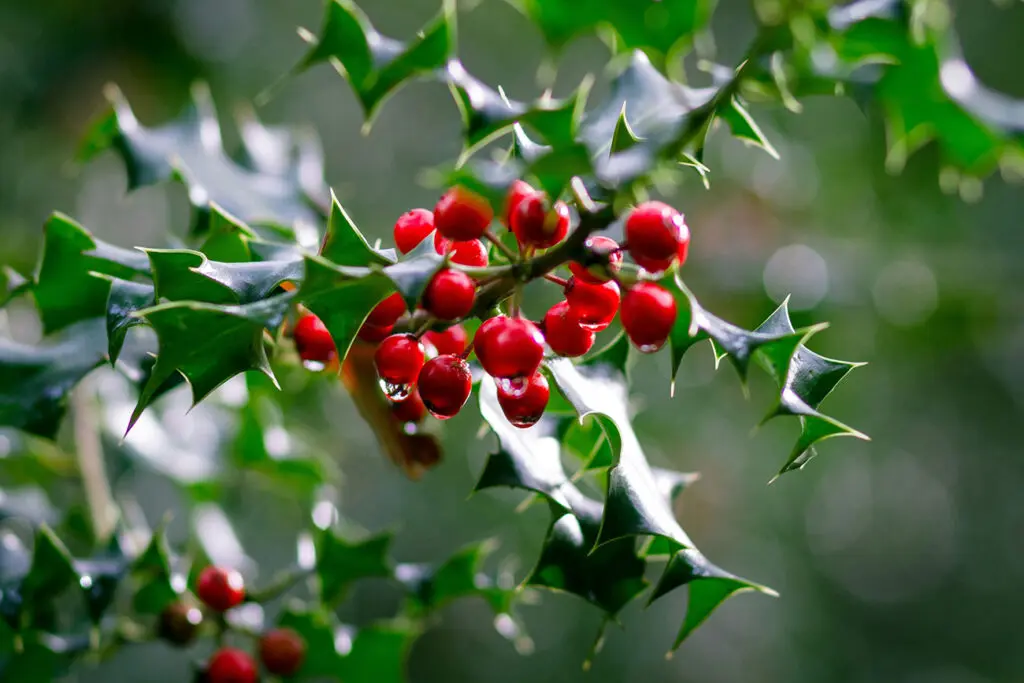
Holly (American or English)
Bright red berries and shiny leaves make holly a holiday favorite, but it packs a punch for pets.
Why it’s toxic:
Holly contains saponins, which irritate the GI tract and lead to liver failure if ingested.
Symptoms:
- Vomiting
- Diarrhea
- Drooling
- Lack of appetite
Berries tend to be the most enticing — and the most irritating.
Mistletoe
True mistletoe (Phoradendron spp. or Viscum album) can be dangerous.
Why it’s toxic:
It contains lectins and phoratoxins, which affect the GI system and, in large amounts, the heart.
Symptoms:
- Vomiting
- Diarrhea
- Abdominal pain
- Drooling
- Severe cases: abnormal heart rate, collapse
Most pets don’t ingest enough to reach severe toxicity, but any ingestion should be taken seriously.
Christmas Trees (Pine, Fir, Spruce)
While the trees themselves are only mildly irritating, they still pose risks. Cats are also notorious for sipping the water collected at the base of the Christmas tree.
Because of this, avoid adding any products meant to extend the tree’s freshness. Additives such as fertilizers, preservatives, and sugar substitutes—especially xylitol—can make the water toxic for cats. Even natural tree oils can leach into the water and cause problems.
Eating these substances can cause problems. Your cat might have a mild stomach upset or serious issues like seizures. They can also cause kidney and liver damage.
If you want to use an additive, make sure your cat can’t access the stand at all – use a covered tree base or block off the area completely.
Common problems:
- Chewing needles → mouth irritation or GI upset
- Drinking tree water → can contain mold, bacteria, fertilizer, or preservatives
- Tree needles → risk of GI obstruction if eaten in large amounts
Symptoms:
- Vomiting
- Diarrhea
- Drooling
- Lethargy
Also watch for broken ornaments, tinsel, or string — these foreign bodies are common holiday emergencies.
Amaryllis
Popular for holiday centerpieces, amaryllis bulbs and leaves contain toxins.
Why it’s toxic:
Contains alkaloids that affect the GI tract and nervous system.
Symptoms:
- Vomiting
- Diarrhea
- Abdominal discomfort
- Tremors (rare but possible)
Christmas Cactus
Good news: Christmas cactus is non-toxic, but it can still cause issues if chewed.
Symptoms (if ingested):
- Mild vomiting
- Mild diarrhea
It’s generally considered one of the safer holiday plants for homes with pets.

Pet-Friendly Alternatives
If you want the holiday look without the worry, try these safer options:
- Artificial poinsettias or holly
- Pet-safe wreaths or garlands
- Rosemary topiaries
- Orchid arrangements
When to Contact a Veterinarian
Seek veterinary care or a pet poison hotline immediately if your dog or cat:
- Ate or chewed part of a toxic plant
- Is vomiting repeatedly
- Shows signs of lethargy
- Has drooling, tremors, or abnormal behavior
- Is a cat exposed to lilies — this is always an emergency
Acting quickly can make a huge difference in preventing serious complications.
FAQs
Yes — aloe vera is toxic to both dogs and cats, but only certain parts of the plant are the problem.
Why Aloe Vera Is Toxic
Aloe contains a compound called aloin (found in the latex—the yellow sap just under the leaf skin). Aloin is a strong laxative and irritant.
- Toxic parts: latex (sap), outer leaf
- Less risky: the inner gel is much less toxic, but whole leaves usually contain some latex, so the plant as a whole is considered unsafe for pets.
What Happens if a Dog or Cat Eats Aloe?
Symptoms typically appear within a few hours:
Mild to moderate symptoms
- Vomiting
- Diarrhea (sometimes severe)
- Drooling
- Abdominal pain
- Loss of appetite
- Lethargy
More serious symptoms (larger amounts)
- Trembling
- Changes in urine color
- Electrolyte imbalance due to diarrhea
When to Seek Vet Care
Contact your vet or a pet poison hotline any time your pet eats aloe, especially if:
- You see persistent vomiting or diarrhea
- Your pet seems weak or unusually tired
- A large portion of the plant was consumed
Safe Alternatives
If you like the look of aloe, consider pet-safe lookalikes:
- Christmas cactus
- Haworthia
- Echeveria
Yes — Calla Lilies are toxic to both cats and dogs. But it’s important to understand how they’re toxic, because they are not true lilies and do not contain the deadly lily toxin that can cause kidney failure in cats.
Why Calla Lilies Are Toxic
Calla Lilies (Zantedeschia species) contain insoluble calcium oxalate crystals.
These microscopic needle-like crystals cause intense irritation when chewed.
- Toxic part: all parts of the plant
- Type of toxicity: oral irritation, not organ failure
Symptoms in Cats & Dogs
Symptoms usually appear immediately after chewing the plant:
- Drooling / hypersalivation
- Pawing at the mouth
- Vomiting (sometimes)
- Oral pain or swelling
- Decreased appetite
- Difficulty swallowing
These symptoms are painful but typically not life-threatening.
When to See a Vet
Seek veterinary care if:
- Your pet ate a large amount
- There is significant swelling or persistent drooling
- Your pet won’t eat or drink
- Symptoms last longer than a few hours
Pet-Safe Alternatives That Look Similar
If you like the aesthetic of Calla Lilies, try:
- Orchid species
- Bromeliads
Yes — Elephant Ear plants are toxic to both dogs and cats. This includes common varieties such as Alocasia, Colocasia, and Xanthosoma.
Why Elephant Ears Are Toxic
These plants contain insoluble calcium oxalate crystals (the same type found in Calla Lilies and Dieffenbachia).
When a pet chews the plant, these microscopic crystals embed into their mouth, tongue, and throat tissues, causing intense irritation.
- Toxic part: all parts of the plant
- Type of toxicity: oral irritation (not organ damage)
Symptoms in Dogs & Cats
Symptoms typically appear right away:
- Severe drooling
- Pawing at the mouth
- Vomiting
- Oral pain and swelling
- Difficulty swallowing
- Decreased appetite
- In some cases: swelling of the tongue/throat → trouble breathing (rare but serious)
When to Seek Veterinary Care
Get veterinary help if:
- Your pet can’t stop drooling
- There is noticeable swelling of the face or mouth
- Breathing seems difficult
- Your pet refuses to eat or drink
- Symptoms persist longer than a few hours
Pet-Safe Alternatives
If you love the large tropical-leaf look, try:
- Calathea species (non-toxic)
- Areca palm
- Parlor palm
- Spider plant
About The Author