
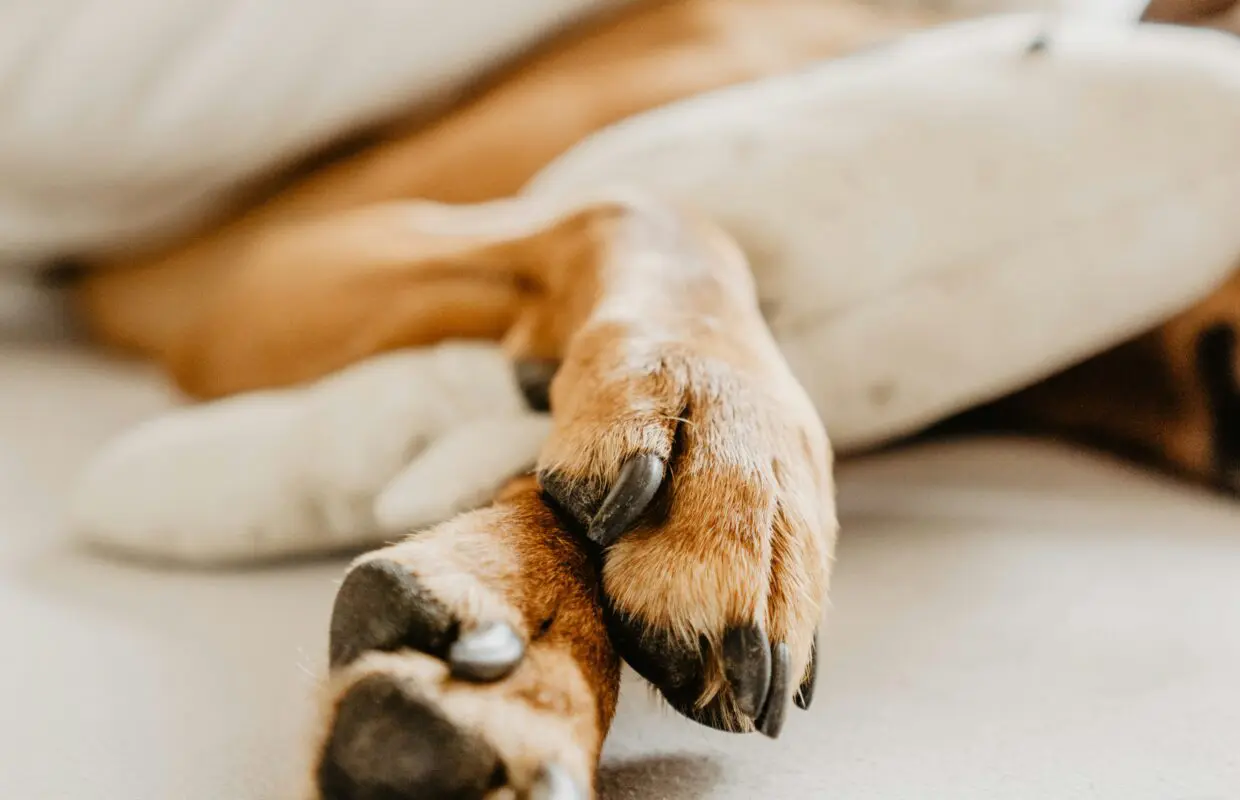
A canine paw injury is one of the most common reasons dogs start limping, and it can happen on a walk around the block just as easily as during a hike. Paws take on a lot of wear, from hot pavement in the summer to salt and ice in the winter, and a small cut or burn can turn into a bigger problem if it’s missed.
Here’s how to recognize a paw injury, what first aid steps are safe to try at home, and when it’s time to have your vet take a look.
Common Causes of Canine Paw Injuries
Dogs pick up paw injuries in more ways than most owners expect. Some of the most frequent causes include:
- Cuts or punctures from glass, sharp objects, sticks, or metal debris
- Burns from hot pavement, sand, or asphalt in warm weather
- Cracked, dry, or peeling pads from cold weather, salt, or de-icing chemicals
- Torn or broken nails caught on carpet, furniture, or uneven ground
- Foreign objects lodged between the toes or in the pad, such as thorns or splinters
- Insect stings or bites on the paw or between the toes
- Allergic reactions that cause swelling, redness, or excessive licking at the paw
Some injuries are obvious right away, while others, like a small splinter or an early hot spot, are easier to miss until your dog starts favoring that paw. Dog paw pad injuries in particular can look minor on the surface while causing real discomfort underneath.
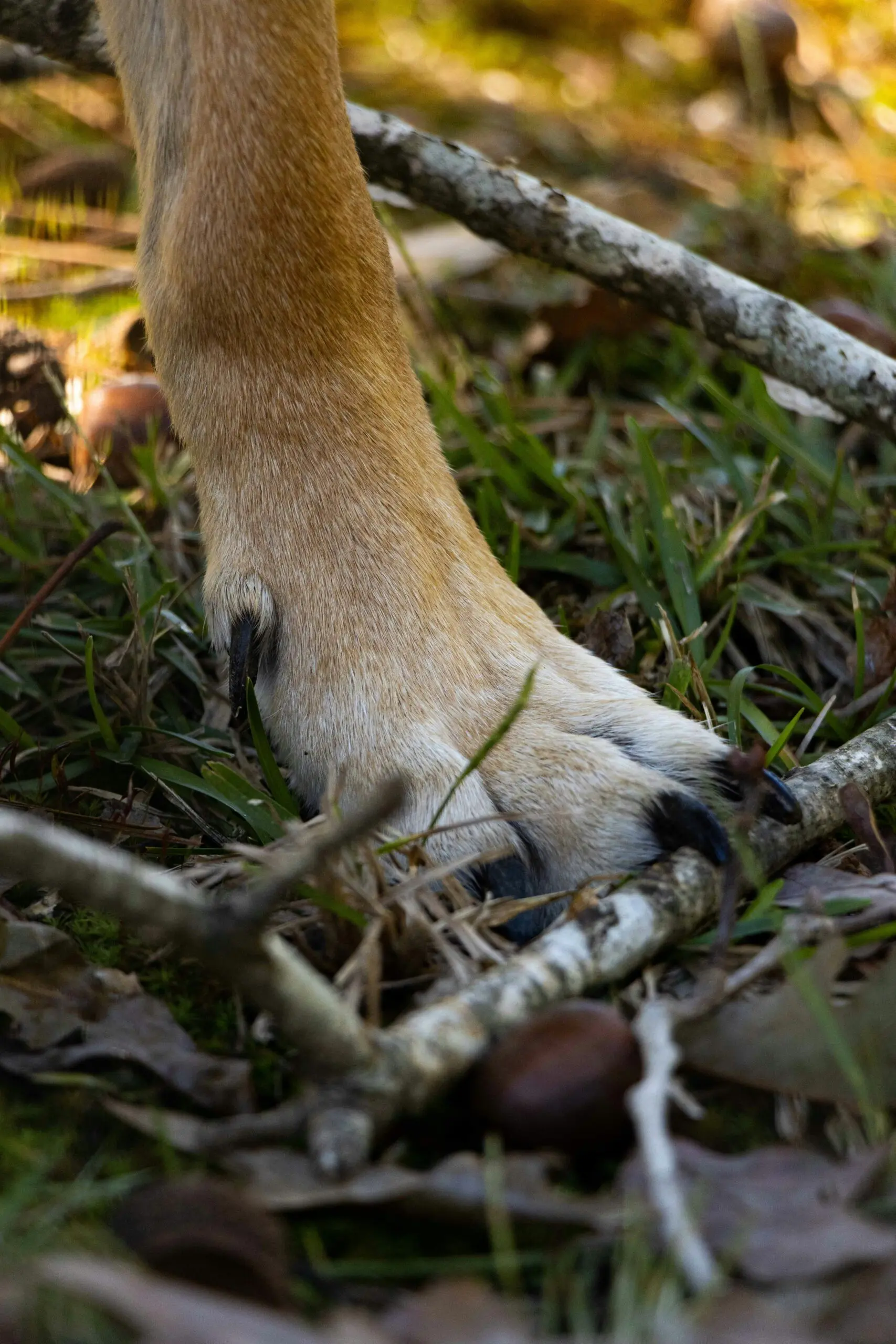
Signs of a Paw Injury or Limping in Dogs
Limping is often the first clue that something is wrong, but it’s worth checking your dog’s paw pads for additional signs, including:
- Licking or chewing at one paw more than the others
- Visible cuts, redness, swelling, or blistering
- Bleeding or a torn nail
- A limp that gets worse with activity or doesn’t improve with rest
- Reluctance to put weight on the paw, or holding it up entirely
- Warmth, discharge, or an odor coming from the paw, which can point to infection
- A change in gait, such as walking on the side of the foot to avoid pressure on the pad
- Small stones, burrs, or debris stuck in their pads after being outdoors
Dogs are good at hiding pain, so even a subtle limp or a paw that’s being held slightly differently than usual is worth a closer look.
First Aid Steps for a Dog Paw Injury
If you notice your dog limping or favoring a paw, a calm, step by step approach helps prevent further injury while you assess the situation.
Limit Activity: Keep walks short and on soft, clean surfaces while the paw recovers, and avoid hot pavement, gravel, or rough terrain until your vet gives the all clear.
Check the Paw Carefully: Gently inspect between the toes and across the pad for cuts, swelling, or foreign objects. Use good lighting and go slowly, since a painful paw may make your dog want to pull away.
Remove Visible Debris: If you can see a splinter, thorn, or small piece of glass sitting near the surface, you can try to remove it with clean tweezers. Leave anything embedded deeply alone and let your vet handle it instead.
Clean the Wound: Flush cuts or scrapes with clean, cool water or a pet-safe saline solution to remove dirt and debris. Avoid hydrogen peroxide or alcohol, which can irritate the tissue and slow healing.
Apply Pressure: Use a clean cloth or gauze pad and apply pressure directly over the wound for several minutes. Most minor cuts stop bleeding within five to ten minutes of steady pressure.
Bandage if Needed: A light, non-stick bandage can protect the paw and keep your dog from licking it, giving the wound a better chance of healing properly. Wrap it snugly but not tight enough to cut off circulation, and check often for swelling above the bandage.
Prevent Licking: Constant licking slows healing and increases the risk of infection. An e-collar or a soft protective boot can help keep your dog from bothering the area while it heals.
When Limping Means It’s Time to See Your Vet
Not every paw injury needs an emergency visit, but some situations call for prompt veterinary attention. Seek veterinary care if you notice:
- Bleeding that doesn’t slow down after ten minutes of direct pressure
- A deep cut, torn pad, or visible tissue beneath the wound
- A limp that lasts more than a day or two, or gets worse instead of better
- Swelling, warmth, discharge, or a bad smell coming from the paw, all signs of infection
- A foreign object that’s embedded and can’t be safely removed at home
- Your dog refusing to bear any weight on the affected leg
- Signs of a broken bone, such as an oddly angled leg or extreme pain when touched
According to the American Veterinary Medical Association, any first aid given at home should be followed by veterinary care, since injuries that look minor on the surface can be more serious underneath. A dog checkup also gives your vet the chance to catch problems like early infection before they become harder to treat.
Preventing Paw Injuries in Dogs
A few simple habits can lower the odds of a paw injury:
Use paw balm or protective boots for dogs prone to dry, cracked pads
Check the temperature of pavement or sand with your hand before walking your dog on it
Keep yards and walking paths free of glass, sharp debris, and loose nails
Rinse and dry paws after walks in salted or icy areas during winter
Trim overgrown nails regularly to prevent snags and tears
Frequently Asked Questions About Dog Paw Injuries
How long does it take for a dog’s paw injury to heal? Minor cuts and abrasions often heal within a week or two with proper care, while deeper cuts or torn pads can take several weeks and may need bandage changes and follow-up visits for your dog to fully recover.
Can I use human antibiotic ointment on my dog’s paw? Check with your vet first. Some human products aren’t safe for dogs if licked off, and your vet can recommend a pet-safe option along with the right dose of any oral medication if one is needed.
Why does my dog keep limping even though I don’t see an injury? Not every paw problem is visible from the outside. Something lodged between the toes, a small crack in the pad, or a joint issue further up the leg can all cause limping without an obvious wound, which is a good reason to have it checked out.
Trust Hershey Veterinary Hospital for Paw Injuries and Limping
At Hershey Veterinary Hospital, our team has experience treating canine paw injuries of all kinds, from minor scrapes to deeper wounds that need bandaging and follow-up care. We’ll help you figure out what’s causing your dog’s limp and get them back on all four paws comfortably.
Noticing a Limp or Paw Injury? Please Make an Appointment With Us!
If your dog is limping or has a paw injury that isn’t improving, call us at 717-534-2244 or contact us today. Bring your dog in and our team can evaluate the paw and recommend the right next steps for a smooth recovery.
About The Author